Cheekbone Fractures (Zygomatic Fractures): Symptoms, Surgery and Recovery
Dr Varun Harish, FRACS Plastic Surgeon
First published:
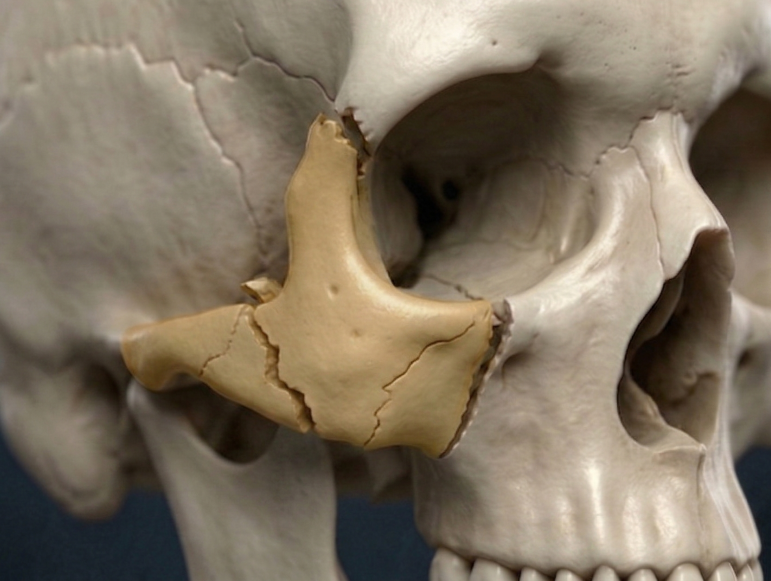
A cheekbone fracture is a break in the zygomatic bone, which forms the prominence of the cheek and part of the eye socket.
After an injury, a broken cheekbone is usually suspected if there is swelling or bruising around the eye, flattening of the cheek, numbness in the upper lip or teeth, difficulty opening the mouth, or changes in vision.
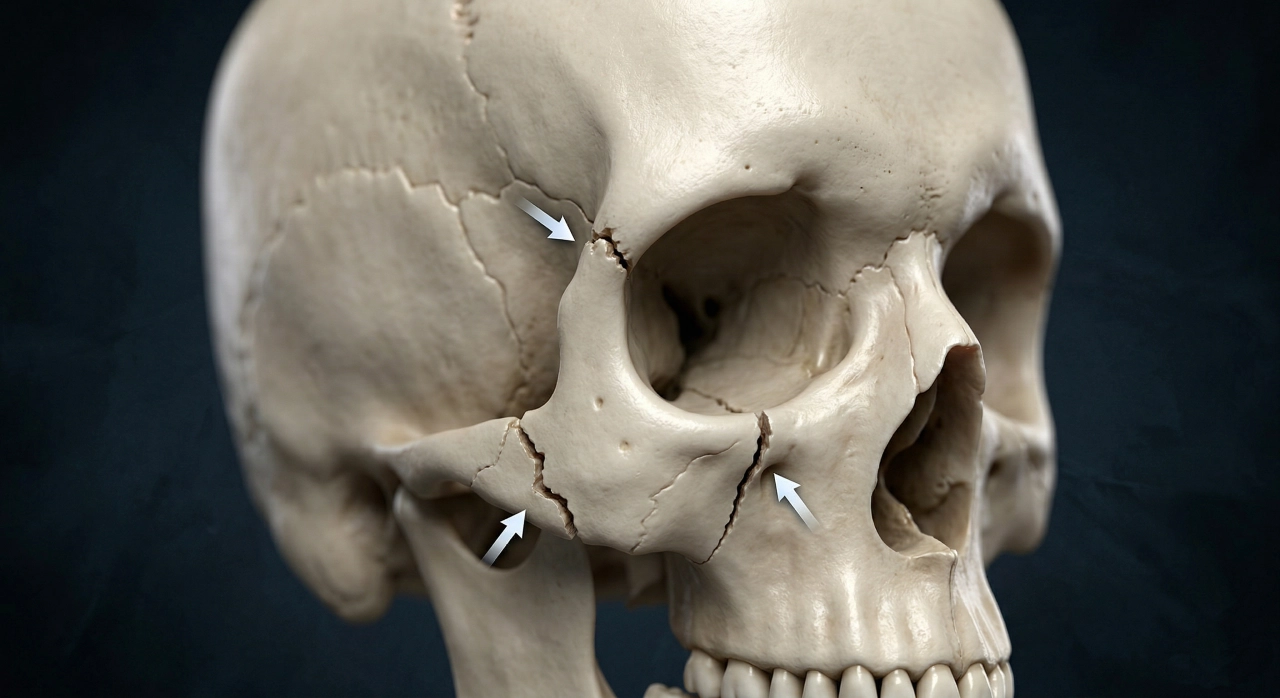
Some cheekbone fractures are minor and can heal without surgery. Others involve the broader zygomaticomaxillary complex (ZMC), sometimes referred to as a “tripod fracture,” meaning the injury affects not only the shape of the cheek but also nearby structures that influence mouth opening, sensation, and eye function.
This guide explains the signs of a cheekbone fracture, how it is diagnosed, when surgery may be needed, and what recovery usually involves. For comparison, injuries affecting the bite and jaw function are covered in the broken jaw guide.
 At a glance
- A broken cheekbone is a fracture of the zygomatic bone that can affect facial shape, mouth opening, sensation, and sometimes the eye socket.
- Key signs of a broken cheekbone include swelling, bruising, flattening of the cheek, numbness, and difficulty opening the mouth.
- A CT scan is usually used to diagnose the break and determine if surgery is required.
- Not every cheekbone fracture needs surgery.
- Surgery is more likely if the fracture is displaced (has moved) or if it causes the cheek to flatten (and lose its projection), affects mouth opening, or interferes with eye function.
- Recovery is usually measured in weeks, with ongoing improvement over months.
When to seek urgent medical care
Seek urgent assessment after facial injury if you develop:
- double vision or a sudden change in vision
- an eye that appears sunken or out of position
- difficulty opening the mouth
- changes in the appearance of the cheek
- significant bleeding, breathing difficulty, or associated head injury

What Is a Cheekbone Fracture?
A cheekbone fracture is a break in the zygoma bone, which forms the prominence of the cheek and contributes to the lower and outer part of the orbit (eye socket). Some fractures are relatively limited. Others involve the broader zygomaticomaxillary complex, which means the injury affects not only the shape of the cheek but also nearby structures that influence mouth opening, sensation, and eye function.
Because the cheekbone helps support the middle part of the face and the orbit, these injuries can affect both appearance and function. That is why a cheekbone fracture is not judged only by swelling or bruising. The key questions are whether the bone has moved out of position, whether the cheek looks flatter, whether the mouth opens normally, and whether the eye socket has also been affected.
What Are the Signs of a Cheekbone Fracture?
The signs of a cheekbone fracture vary depending on how the bone has broken and whether the eye socket is also involved. Common features include:
- swelling and bruising around the cheek and eye
- flattening of the cheek or asymmetry of the face
- numbness over the cheek, upper lip, side of the nose, or upper teeth
- pain when chewing
- difficulty opening the mouth fully (often related to involvement of the zygomatic arch)
- double vision or pain with eye movement
- the eye appearing sunken or sitting differently from the other side
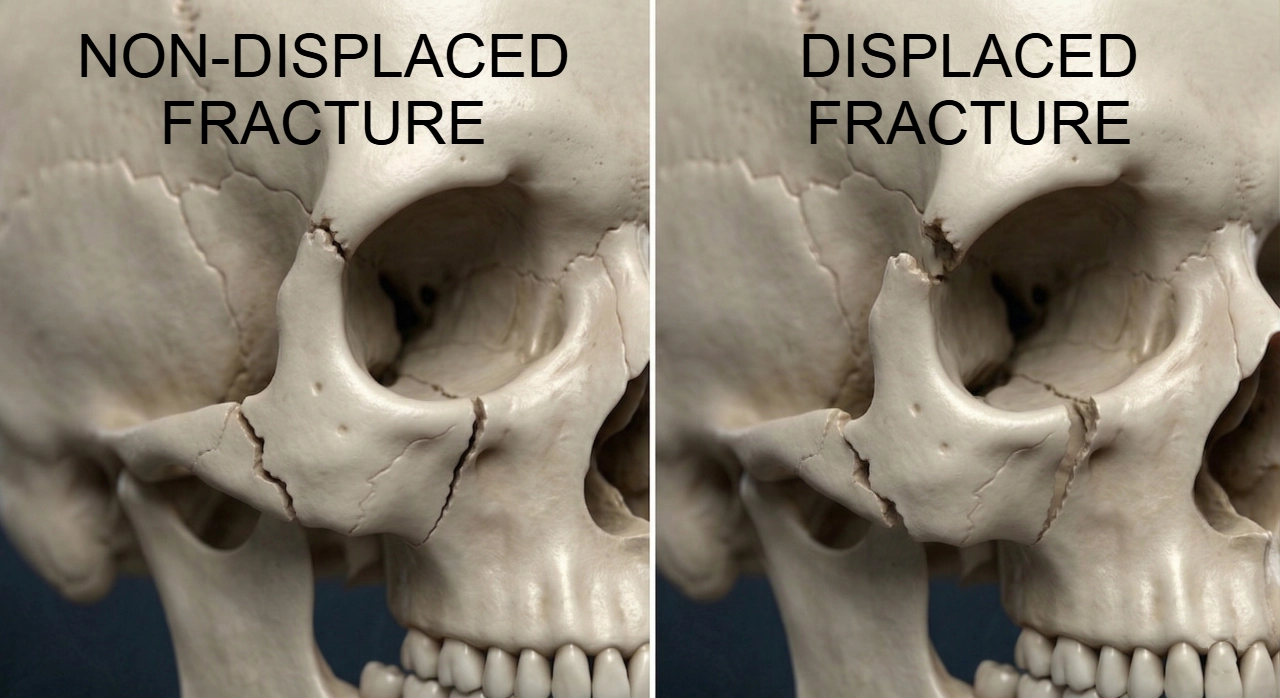
Not every patient will have all of these symptoms. When the bone has not moved significantly after the injury, it is deemed minimally displaced and the main issues may be swelling, bruising, and tenderness. In a more significant injury when the bone has moved (displaced), there may be visible flattening of the cheek, altered sensation, reduced mouth opening, or symptoms related to the eye socket such as double vision.
Unlike jaw fractures, cheekbone injuries do not usually change how the teeth meet — see broken jaw symptoms for how bite changes can signal a different type of injury.
How Is a Broken Cheekbone Diagnosed?
A broken cheekbone is diagnosed using both examination and imaging. Examination focuses on the shape of the cheek, tenderness, swelling, sensation over the cheek, upper lip and teeth, the ability to open the mouth, and whether eye movement or vision appear affected.
A CT scan is usually the main imaging test used to diagnose the break, define the fracture pattern (displacement) and determine whether the orbit (eye socket) is involved. This matters because swelling alone can make it difficult to judge how much the bone has moved. CT also helps clarify how treatment should be planned.
Is a Cheekbone Fracture Serious?
A broken cheekbone can range from minor to more significant depending on whether the bone has moved out of position and whether the eye socket is involved. Injuries affecting facial shape, mouth opening, or vision are generally considered more serious and may require closer assessment or treatment.
Does a Broken Cheekbone Always Need Surgery?
Not every broken cheekbone needs surgery. A fracture may be treated without surgery if the bone remains in a reasonable position (minimal or no displacement), the shape of the cheek is preserved, mouth opening is acceptable, and there are no significant eye symptoms.
Surgery becomes more likely when the broken bones have moved (become displaced) and/or when the injury causes problems such as:
- flattening of the cheek
- restricted mouth opening
- double vision or painful eye movement
- a sunken or malpositioned eye if the eye socket is involved
- persistent deformity that is unlikely to settle on its own
The decision is not made from the scan alone. It depends on the combination of fracture position, facial shape, mouth opening, and eye socket symptoms. That is why two patients with “broken cheekbone” may not need the same treatment.
When surgery is less likely vs more likely
| Surgery is less likely if: | Surgery is more likely if: |
|---|---|
| - the fracture is non-displaced or only minimally displaced - the cheek shape is maintained - mouth opening is acceptable - there are no important eye socket symptoms | - the cheek is visibly flatter - the fracture has caused displacement - mouth opening is restricted - the eye socket is involved - double vision or eye movement problems are present |
Unsure whether a cheekbone fracture is likely to need surgery?
A formal assessment can help determine whether the fracture is displaced, whether the eye socket is involved, and whether treatment is likely to be observation or surgery.
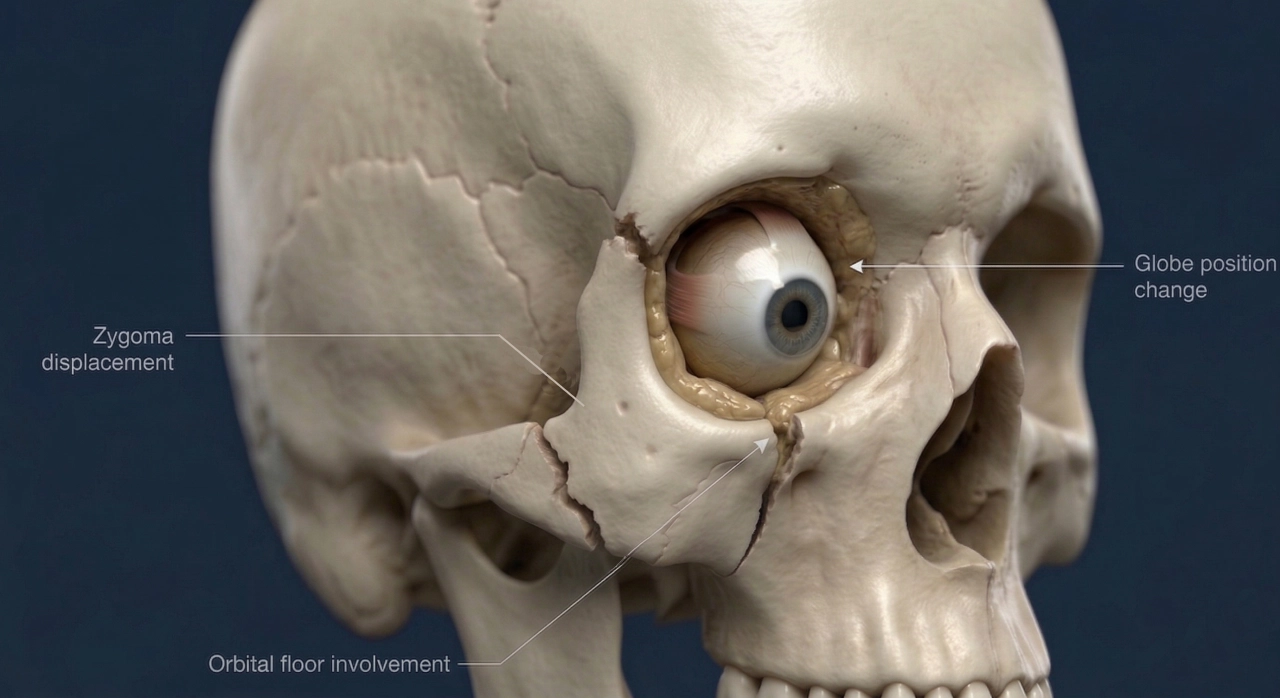
How Can a Cheekbone Fracture Affect the Eye Socket?
The zygomatic bone forms part of the cheek and part of the orbit (eye socket), so some broken cheekbones also affect the eye socket. When these fractures affect the eye socket, they may affect the floor of eye socket (orbital floor) or the rim of the eye socket (orbital rim). That is why a patient with a cheekbone fracture may develop symptoms that seem more “eye-related” than “cheek-related.”
If the eye socket is involved, symptoms may include:
- double vision
- pain when moving the eye
- numbness beneath the eye
- the eye looking sunken or sitting lower than the other side
Not every zygoma (cheekbone) fracture affects the orbit, but when it does, that changes both assessment and treatment planning. It is one reason CT scanning and formal assessment of eye movement are important after facial trauma.
How cheekbone fractures are treated
What Does Cheekbone Fracture Surgery Involve?
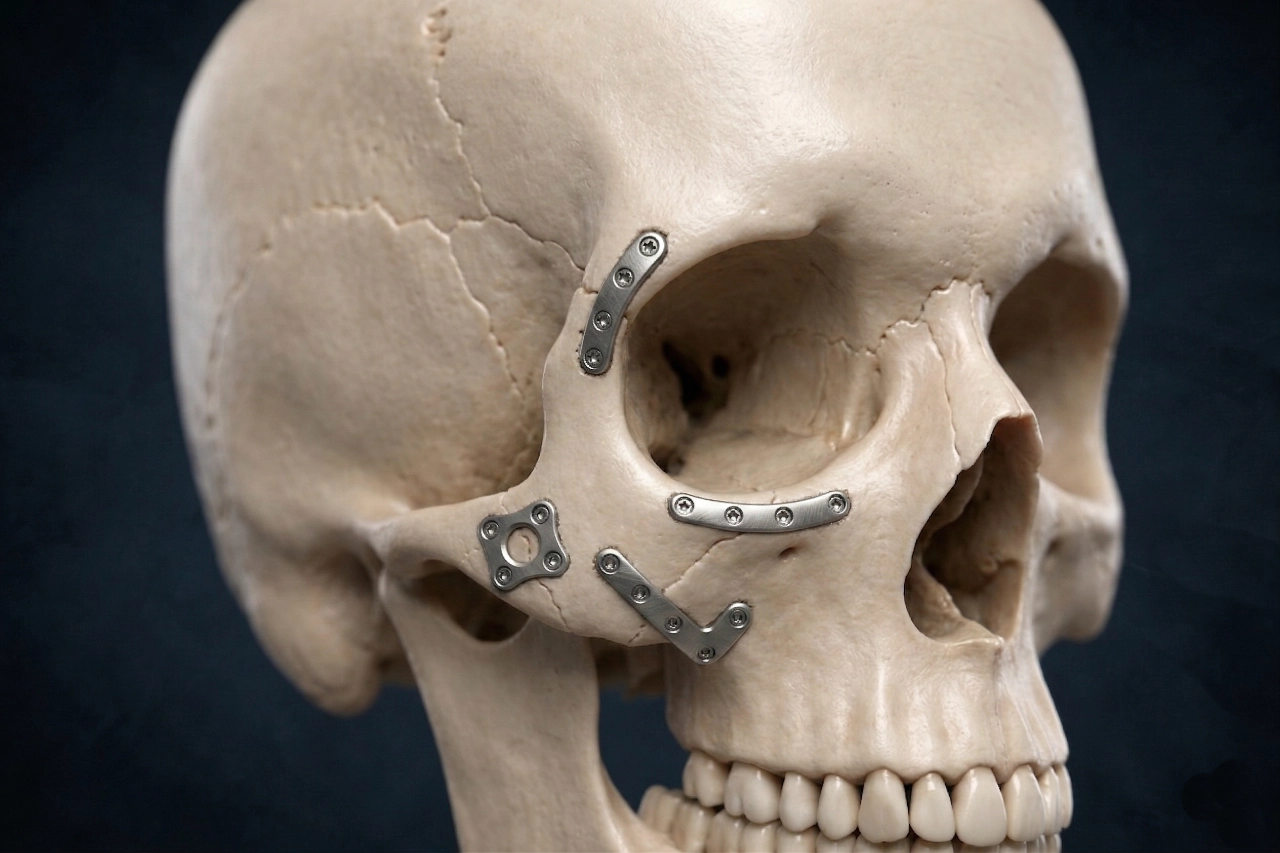
When surgery is needed, the aim is to reposition the cheekbone accurately and stabilise it while it heals. Accurate repositioning is important not only for appearance, but also for restoring function of the eye socket and jaw. Depending on the fracture pattern, this may involve small plates and screws to hold the bone in the correct position.
The incisions used depend on which parts of the cheekbone complex are affected. Access to the bone may be obtained:
- inside the mouth
- within the temple hairline
- around the eyelid or eyebrow region
These incision sites are chosen to allow accurate treatment while keeping visible scarring as discreet as possible. If the fracture also affects the eye socket, treatment of the eye socket component may sometimes be done at the same time.
Quick Answers
Cheekbone Fracture Recovery and Healing Time
Recovery after a broken cheekbone depends on how severe the injury is and whether surgery was required, but it is usually measured in weeks rather than days.
A simple guide is:
First 48 to 72 hours: Swelling and bruising are often at their worst.
1 to 2 weeks: Early settling occurs and any wounds or incisions can be reviewed.
4 to 6 weeks: Bony healing progresses, but the face still needs protection from further impact.
Several months: Numbness, contour changes, and scar maturation may continue to improve.
Some symptoms improve quickly. Others, especially altered sensation, can take longer. That does not necessarily mean something is wrong, but it does mean recovery should be judged over time rather than only in the first few days.
What Should I Avoid During Recovery?
Recovery is not only about waiting for swelling to settle. It is also about avoiding things that can worsen pain, disrupt healing, or place pressure on the repair.
Depending on the zygoma (cheekbone) fracture pattern and treatment, patients may be advised to:
- avoid pressure on the injured cheek
- avoid contact sport or another impact to the face while healing
- avoid blowing the nose if the fracture also involves the eye socket or nearby sinus
- sleep with the head elevated if swelling is significant
- use a softer diet if chewing is painful
- follow specific mouth-care instructions if there is an incision inside the mouth
The exact restrictions depend on the injury pattern and whether surgery was required, but the general principle is to protect the healing bone and avoid pressure-related worsening.
When Can I Return to Work, Gym, and Sport?
Return to activity after a cheekbone fracture depends on the severity of the injury, whether surgery was needed, and whether the orbit was involved.
Many people can return to light daily activity or desk-based work earlier than they can return to gym training, lifting, or contact sport. Activities that risk another blow to the face usually need the greatest caution, because the healing bone still needs protection even after the worst swelling has settled.
A practical way to think about it is:
- light activity often resumes earlier
- strenuous exercise usually waits until healing is further along
- contact sport or impact risk typically requires the most conservative timing
Your treating team can give more specific advice based on the fracture pattern, CT findings, and whether surgery was performed.
Will I Need Follow-Up After a Cheekbone Fracture?
Follow-up after a cheekbone fracture is often used to assess how the injury is settling, whether the facial profile is improving, whether mouth opening is returning, and whether symptoms such as numbness or double vision are resolving as expected.
This is especially important if:
- the fracture was treated without surgery but symptoms are ongoing
- surgery was performed and healing needs review
- the eye socket was involved
- there is persistent asymmetry, numbness, or restricted mouth opening
Follow-up is one of the ways recovery is judged over time, rather than only in the first few days after injury.
What Happens If a Cheekbone Fracture Is Left Untreated?
Not every cheekbone fracture needs surgery, but a fracture that heals in the wrong position may leave persistent problems. These might include:
- flattening of the cheek
- ongoing numbness
- reduced mouth opening
- persistent eye-related symptoms if the eye socket was involved
- a more complex correction later if the bone heals in poor alignment
That does not mean every untreated fracture will cause long-term problems. It means the consequences depend on whether the fracture is displaced and whether the injury affects shape or function. The reason that early assessment matters is that once the bone heals in a poor position, later correction can be more complicated than early treatment.
Can it heal on its own?
Yes, some cheekbone fractures can heal without surgery. The key question is whether they heal in a good position and without ongoing functional problems.
If the cheek appears flatter, the mouth does not open normally, or eye symptoms persist after injury, early review is more useful than waiting for the bone to heal in the wrong position. Request an appointment if you need advice on diagnosis, recovery, or whether surgery may be appropriate.
Frequently Asked Questions
Can a cheekbone fracture heal without surgery?
Can a cheekbone fracture heal without surgery? Yes. A cheekbone fracture may heal without surgery if the bone has not moved significantly and the injury is not causing problems with the cheek position, mouth opening, or the eye socket.
How long does swelling from a cheekbone fracture last?
Swelling is often worst in the first few days and usually improves over the following weeks, although recovery varies depending on the severity of the injury and whether surgery was needed.
How long can numbness last after a cheekbone fracture?
Numbness is common after a broken cheekbone and is due to trauma to the infraorbital nerve, the nerve running through the eye socket and cheekbone responsible for sensation in the cheek, upper lip and teeth. Altered sensation may improve gradually over time, but recovery can be slower than swelling or bruising. Improvement is often judged over months rather than weeks.
Will I need plates and screws?
Not always. Plates and screws are more likely to be used when the fracture is displaced and needs stabilisation after being repositioned.
Will I have visible scars after surgery?
Incisions are often placed inside the mouth, within the hairline, or around natural facial creases where possible, depending on the fracture pattern.
Is double vision after a cheekbone fracture serious?
Double vision can be an important sign that the eye socket is also involved. It should not be ignored, especially if it is persistent or associated with painful eye movement.
Can a cheekbone fracture affect the eye socket?
Yes. Because the zygoma forms part of the eye socket, some cheekbone fractures also affect the eye socket.
When can I return to work, gym, or sport?
This depends on the fracture pattern, whether surgery was needed, and whether there is a risk of further impact to the healing bone. Light activity often resumes earlier than gym or contact sport.
About the Author
Dr Varun Harish is a Specialist Plastic, Reconstructive & Burns Surgeon (FRACS) involved in the assessment and management of facial injuries, including cheekbone, jaw, and orbital fractures. He works within major Sydney hospital systems, including Royal North Shore Hospital and Liverpool Hospital, where facial trauma (both operative and non-operative) is managed as part of tertiary level multidisciplinary care.
His clinical work focuses on restoring both function and facial contour, with careful assessment of when surgery is required and when it can be safely avoided. He has also contributed to published research in reconstructive and trauma surgery, including work involving advanced intraoperative imaging (CT) to support accurate fracture reduction in selected cases.
This combination of hospital-based trauma experience and reconstructive expertise informs a practical, patient-focused approach to facial fracture care.
Dr Harish is the 2026 recipient of the Dr Ray Hollings Surgical Excellence Award (Northern Sydney Local Health District). He has a strong academic and research interest in plastic and reconstructive surgery, with peer-reviewed publications and ongoing involvement in surgical education.
You can learn more about Dr Varun Harish here.
Educational information prepared by Dr Varun Harish FRACS, Specialist Plastic, Reconstructive & Burns Surgeon – Sydney.
Serving patients across the North Shore, Northern Beaches, Inner West and Central Coast.
Last reviewed April 2026.
Read how this site’s medical content is prepared and reviewed